
How many times have you sat in a meeting where everyone had data but nobody had answers? Where dashboards were full but decisions were still being made on gut feeling? Where the strategy looked perfect on paper but execution kept breaking down in ways nobody could properly explain?
If that sounds familiar you are not alone. And you are not dealing with a people problem.
You are dealing with a capability problem. And that is exactly what CapabiliSense was built to fix.
The capabilisense platform is not another analytics tool dressed up with a new name. It is a decision intelligence system built specifically for the way serious businesses actually operate in 2026 fast, complex, data-heavy and desperately in need of structural clarity that most existing tools simply cannot provide.
Here are the 7 powerful reasons why building capabilisense makes complete sense right now and why the organisations paying attention to this platform are going to have a real advantage over the ones that are not.
Because Data Without Direction Is Just Noise
Every serious business in 2026 has data. Mountains of it. Revenue figures, user metrics, operational KPIs performance dashboards covering every conceivable dimension of company activity.
And yet most leadership teams are still making their most important strategic decisions based on instinct incomplete information and optimistic assumptions about what their organisation can actually handle.
The capabilisense project exists because of that gap. Not the gap between having data and not having data that gap closed years ago. The gap between having data and having the structural intelligence to know what it actually means for your execution capacity right now.
CapabiliSense turns raw operational noise into something genuinely useful. Not more charts. Not more dashboards. A real honest picture of what your organisation is capable of executing today not in theory.
Because Strategy Without Capability Awareness Is Guesswork
Here is something most strategy consultants will not say out loud. A large percentage of strategic plans fail not because the strategy was wrong but because the organisation attempting to execute it was not structurally prepared for what the strategy demanded.
The capabilisense vision grew directly from watching this happen repeatedly. Leadership sets ambitious direction. Teams work hard to deliver against it. And somewhere in the execution, things break because nobody had an honest, structured picture of the gap between strategic ambition and operational capacity.
Why I am building capabilisense comes down to this fundamental conviction. Strategy without capability awareness is not bold leadership. It is expensive guesswork. And the capabilisense platform exists to replace that guesswork with genuine structural intelligence.
When you know what your organisation can actually execute, your strategic conversations change completely. They become grounded. They become honest. And they become far more likely to produce the outcomes you are actually aiming for.
Because Execution Breakdowns Are Preventable

Most organisations discover capability gaps the hard way. A product launch overwhelms the engineering team. A scaling initiative breaks the operations function. A funding round reveals structural weaknesses at exactly the wrong moment.
These are not inevitable surprises. They are predictable consequences of operating without a clear picture of organisational readiness.
Problems capabilisense aims to solve include this exact pattern the reactive cycle of building plans, attempting execution discovering gaps through failure, and spending months recovering from the consequences. The capabilisense platform makes those gaps visible before they produce failures rather than after.
Think about what that means in practice. Instead of discovering that your team cannot handle a particular scaling initiative six months into it you see the structural readiness indicators that predict that outcome before you commit the resources. You make a different decision. You invest in closing the capability gap first. You scale when you are actually ready rather than when the pressure to scale becomes overwhelming.
That shift from reactive to predictive is one of the most valuable things the capabilisense project delivers.
Because Remote and Hybrid Teams Need Better Structural Visibility
The way organisations operate changed permanently over the last several years. Remote work, hybrid arrangements distributed teams across time zones these are not temporary adaptations. They are the new normal for a huge percentage of the serious businesses building in 2026.
And they create a specific challenge that most existing tools handle poorly. When teams are physically distributed the informal mechanisms that used to provide leadership with structural visibility disappear. You cannot walk the floor and get a feel for team capacity. You cannot read the room in a way that tells you when a department is stretched beyond its limits. The signals that used to come naturally through physical proximity have to come through digital systems instead.
Benefits of capabilisense technology for distributed organisations are direct and practical. The platform continuously maps capability across the organisation regardless of where people are located. Leadership gets the structural visibility that physical proximity used to provide but better, because it is systematic consistent and honest rather than impressionistic and subject to who happens to speak loudest in the room.
CapabiliSense was built for the way teams actually work now. Not for an office environment that no longer describes most serious organisations.
Because AI Adoption Without Capability Alignment Creates Chaos
Artificial intelligence is reshaping business faster than most organisations can meaningfully respond to. New tools new capabilities new automation possibilities are arriving constantly. The pressure to adopt and integrate AI across operations, marketing, engineering and customer support is real and growing.
But here is what almost nobody is talking about. AI adoption without capability alignment does not make organisations more effective. It makes them more chaotic.
When you automate processes that are already broken you produce broken results faster. When you integrate AI tools into workflows that your team does not have the structural maturity to manage you create coordination problems rather than solving them. When you adopt automation because the competitive pressure to do so feels urgent rather than because your organisation is genuinely ready for it, you amplify inefficiencies instead of eliminating them.
The story behind building capabilisense includes this dimension specifically. The platform does not compete with AI tools. It complements them by assessing whether your organisation has the structural maturity to benefit from automation or whether automation at this stage will make things worse before it makes them better.
In an AI-driven economy, capability clarity is not a nice-to-have. It is the foundation that determines whether your AI investments deliver genuine returns or simply add complexity to already strained systems.
Because Founders Deserve Better Than Spreadsheets and Gut Feeling
Early-stage founders operate under a particular kind of pressure that people who have not experienced it firsthand genuinely underestimate.
Funding cycles are short. Market expectations are high. Competition is global. Every significant decision carries consequences that can be difficult to reverse. And the information available to make those decisions is almost always incomplete.
In that environment the temptation is to make decisions based on momentum, enthusiasm and the belief that hard work will bridge whatever gap exists between current capacity and strategic ambition. Sometimes it does. But often it does not and the consequences of that gap becoming visible too late are severe.
My journey building capabilisense has been shaped by sitting with founders in those high-pressure moments and watching them make consequential decisions without the structural intelligence that would have changed their choices. Not because they were careless or inexperienced. Because the tools to give them that intelligence did not exist in a form they could actually use.
CapabiliSense changes that. It gives founders an honest, structured picture of organisational readiness that they can use in investor conversations in board meetings in strategic planning sessions and in the daily operational decisions that determine whether ambition translates into execution.
Presenting a capability readiness map alongside growth projections in a funding round is not just impressive. It is a fundamentally different kind of credibility one grounded in structural evidence rather than optimistic forecasting.
Because the Future of Leadership Requires Capability Intelligence
Here is the longer view on future goals of capabilisense platform and why this matters beyond any individual company or any particular product cycle.
Financial accounting became standardised because stakeholders needed a shared, reliable language for understanding organisational health. Before that standardisation, investment decisions were made on incomplete, inconsistent and frequently misleading information. Standardisation did not eliminate risk. But it made risk much more visible and therefore much more manageable.
Capability accounting is going to follow the same trajectory. Investors will ask for capability readiness maps. Boards will expect continuous visibility into execution capacity. Founders will rely on capability intelligence the same way they currently rely on financial intelligence.
The organisations building that capability awareness now before it becomes an industry standard expectation will have a structural advantage that compounds over time. They will make better decisions faster. They will scale more reliably. They will attract investors who value evidenced execution readiness. And they will build cultures where ambition and capacity stay aligned rather than perpetually in tension.
CapabiliSense is being built to be the platform that enables that future. Not just for the largest enterprises with resources to build their own internal capability frameworks, but for every serious founder and operator who deserves to make decisions on honest structural ground.
How CapabiliSense Actually Works
Understanding how capabilisense will work in practice matters as much as understanding why it exists.
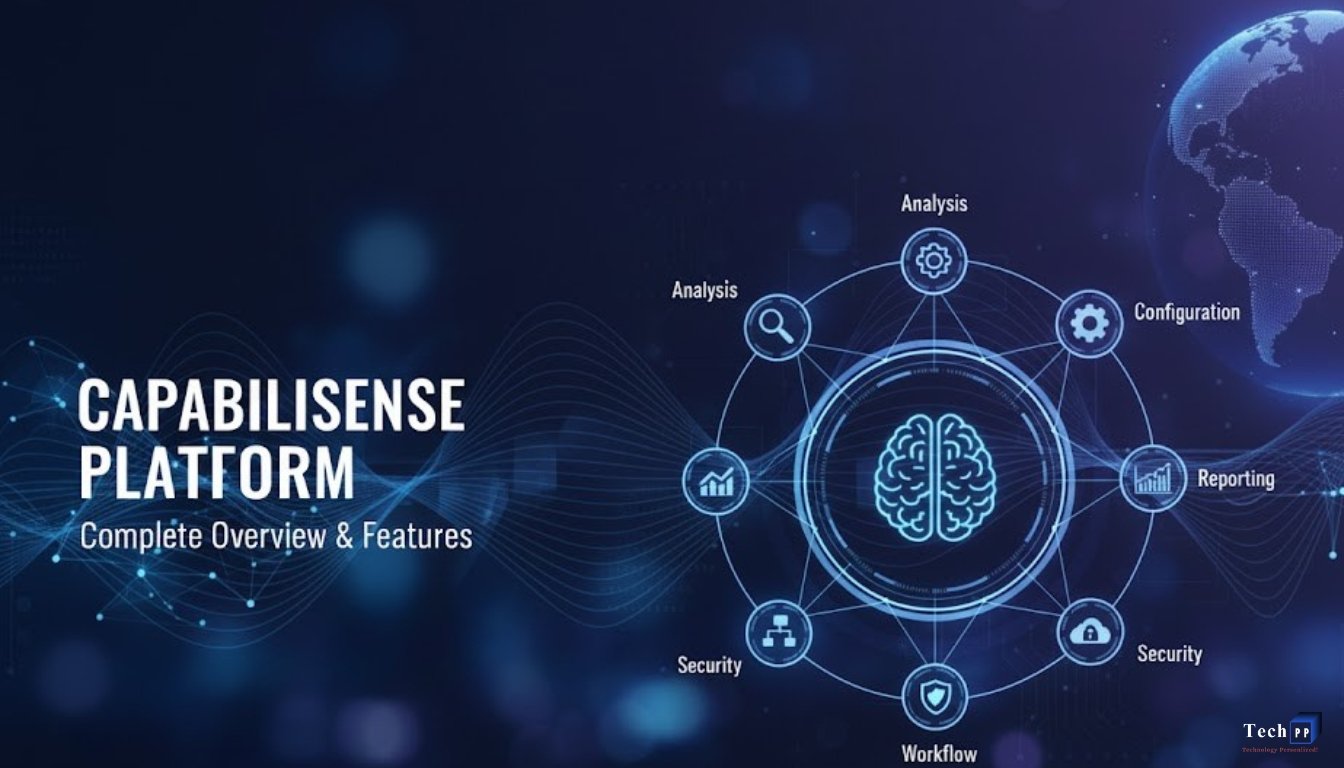
The platform integrates operational data team metrics, workflow signals and infrastructure health indicators into a continuous capability index. This index gives leadership a real-time picture of organisational readiness across the dimensions that actually determine execution quality technical infrastructure, talent distribution, workflow maturity, process scalability and automation depth.
The capabilisense development process has been shaped by real-world testing against actual growth milestones. Capability scoring models are being validated against execution outcomes from real companies at different growth stages. Every iteration reflects input from founders, CTOs and operations leaders who are using the framework in genuinely high-stakes environments.
This is not a theoretical academic model. It is a living system refined by real pressure exactly the kind of pressure that the organisations using it are trying to navigate more effectively.
Who CapabiliSense Is Built For
Who is capabilisense for is worth being specific about.
It is built for founders who are tired of discovering execution gaps through failure and want to see them coming early enough to do something about it. For leadership teams whose strategy conversations need to be grounded in honest capability assessment rather than departmental optimism. For operations leaders who want a systematic way of understanding whether the organisation is ready for what is being asked of it.
It is also built for investors and boards who want structural evidence of execution readiness alongside financial projections. And for the teams doing the actual work who deserve to operate in environments where expectations are calibrated to genuine capacity rather than disconnected from structural reality.
Reason for creating capabilisense ultimately comes back to people as much as it comes back to organisations. When capability gaps are visible and understood, work becomes challenging rather than impossible. Success becomes achievable rather than perpetually out of reach. And the people building these companies get to experience what genuine operational alignment actually feels like.
CapabiliSense FAQs Your Questions Answered
What is CapabiliSense about?
CapabiliSense is a decision intelligence platform that gives leadership a real-time picture of what their organisation can actually execute.
Why am I building CapabiliSense?
Because too many great companies fail not from bad strategy but from never knowing their real capabilisense platform execution limits.
What problem does CapabiliSense solve?
Problems capabilisense aims to solve include capability blind spots, strategy misalignment, reactive decision-making and invisible structural gaps.
How will CapabiliSense work?
The capabilisense project integrates operational data and team metrics into a single capability index for smarter real-time decisions.
Who is CapabiliSense for?
Founders leadership teams and investors who need honest capabilisense vision driven structural intelligence before scaling.
What are the future goals of the CapabiliSense platform?
Future goals of capabilisense platform making capability accounting as standard and expected as financial accounting globally.
What are the benefits of CapabiliSense technology?
Benefits of capabilisense technology include better decisions, fewer execution failures, stronger investor conversations and aligned teams.
The Bottom Line
Seven reasons. One platform. One genuinely important problem that has been causing real damage to real companies for long enough.
CapabiliSense is being built because the tools that serious organisations need to align strategy with structural reality do not currently exist in a form that most founders and operators can actually access and use. That gap has consequences in failed executions, burned-out teams, missed opportunities and strategic decisions made on optimistic assumption rather than honest ground.
The vision behind the idea is straightforward even if the execution is complex. Build the platform that gives organisations the structural self-awareness they need to perform at the level their ambition demands.
The companies that figure this out early will not just make better decisions. They will build better organisations ones where ambition and capacity stay aligned, where teams operate within honest expectations and where growth happens because the foundation is genuinely ready for it.
That is what CapabiliSense is building toward. And in 2026, that work has never mattered more.