

Why Winter Skincare Works for a Baddie Look
Winter skincare is one of the most important seasonal routines, because cold air, indoor heating, and low humidity can leave skin dry, tight, and dull. It works for dry, combination, and sensitive skin, and it pairs beautifully with a gentle cleanser, a hydrating serum, a barrier cream, and a daily sunscreen.
A good winter skincare routine is not about adding many new products at once. It is about gentle cleansing, hydration, and protection: steps that keep skin soft, calm, and healthy, while letting makeup sit smoothly on top. When cleansing and hydration are balanced, winter skin looks fresh and glowing, not flaky or irritated.
This guide gives you a five-step winter skincare routine, plus how to choose the right products, how to adjust the routine for different skin types, and common mistakes to avoid. All of them use ideas you can pair with the oily skin guide, winter makeup looks, and French tip nails on this site.
How to Choose the Right Winter Skincare
Start with your skin type. Dry skin needs richer creams, while combination skin works well with a light serum and a medium cream, and oily skin still needs hydration, but with lighter, gel-based products.
Gentle products matter. Winter skin is often more sensitive, so choose fragrance-free or low-fragrance products, and avoid strong exfoliants and drying toners, which can make dryness worse.
Consistency matters. A simple routine used every day works better than a complicated routine used occasionally, so choose steps you can repeat morning and night, even on busy days.
Step 1: Gentle Cleansing
Gentle cleansing is the first step of a winter skincare routine, and the best place to start. Use a gentle, creamy or milky cleanser, in lukewarm water, and avoid very hot water, which can strip natural oils.
Keep cleansing brief, for about 30 to 60 seconds, and pat skin dry with a soft towel, rather than rubbing, so skin stays calm and comfortable.
For a morning routine, a gentle rinse with water can be enough, if skin feels comfortable, but cleansing in the evening is important, to remove makeup and sunscreen.

Step 2: Hydrating Toner or Essence
A hydrating toner or essence creates a soft, hydrated base for the rest of the routine. Apply it to damp skin, with clean hands, and press it gently into the skin, rather than rubbing.
Keep the product light and hydrating, with ingredients such as glycerin or hyaluronic acid, so skin feels soft, rather than sticky. Add a second layer on very dry areas, such as cheeks, if needed.
For a more hydrating version, layer a hydrating essence under a serum, for extra moisture on cold, windy days. The oily skin guide on this site shows how gentle hydration works for different skin types.
Step 3: Hydrating Serum
A hydrating serum is the key step for winter skincare, because it delivers moisture deep into the skin. Apply a few drops to the face and neck, after toner, and press gently into the skin.
Choose a serum with hydrating ingredients, such as hyaluronic acid or glycerin, and avoid strong active ingredients, unless your skin is used to them, because winter skin can be more reactive.
For a more targeted version, use a serum with niacinamide, which supports the skin barrier and helps skin look calm and even. The winter makeup guide on this site shows how hydrated skin helps makeup look smooth in winter.
Step 4: Barrier Moisturizer
A barrier moisturizer seals in hydration and protects skin from cold air. Apply a cream with ceramides or squalane, after serum, and massage gently over the face and neck.
Keep the cream rich enough to feel comfortable, but not heavy, so skin feels soft, rather than greasy. For very dry skin, a richer cream at night works beautifully, while a lighter cream works well in the morning.
For a more protective version, add a thin layer of a barrier balm on very dry areas, such as around the nose and lips, on cold, windy days.
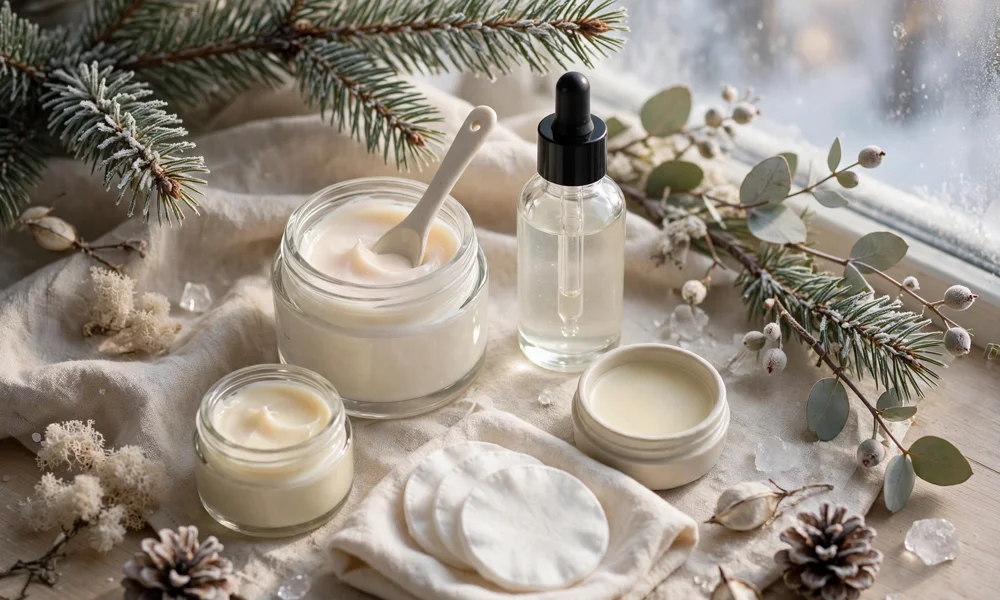
Step 5: Daily Sunscreen
Daily sunscreen is the final step of a winter skincare routine, and one of the most important. Apply a broad-spectrum sunscreen every morning, even on cloudy days, because winter sun still affects skin.
Keep sunscreen as the last step in the morning, after moisturizer, and reapply if you spend a long time outdoors, especially in snow, which reflects sunlight.
For a more comfortable version, choose a sunscreen with a moisturizing formula, so it layers well under makeup and does not feel drying. The French tip nails guide on this site shows how winter self-care routines pair with polished, seasonal beauty looks.
Winter Skincare for Different Skin Types
For dry skin, use a creamy cleanser, a hydrating serum, and a rich barrier cream, morning and night, for a soft, comfortable routine that prevents flakiness.
For combination skin, use a gentle cleanser, a light serum, and a medium cream, with a richer cream only on dry areas, such as cheeks, for a balanced routine.
For oily skin, use a gentle gel cleanser, a light hydrating serum, and a gel-cream moisturizer, so skin stays hydrated without feeling heavy. The oily skin guide on this site explains how hydration still matters for oily skin.
For sensitive skin, use fragrance-free products, introduce one new product at a time, and patch-test new products, so you can spot any irritation quickly.
How to Build a Winter Morning Routine
A winter morning routine should feel simple and comfortable. Start with a gentle cleanse or rinse, then apply a hydrating toner, a hydrating serum, a barrier moisturizer, and sunscreen, in that order, so each layer seals in the previous one.
Keep morning products light enough to layer under makeup, so makeup sits smoothly and does not pill. Wait a minute between layers, so each product absorbs before the next one is applied.
For a more polished morning, finish with a lip balm and hand cream, so lips and hands stay soft throughout the day.
How to Build a Winter Night Routine
A winter night routine can be slightly richer, because skin repairs overnight. Start with a gentle cleanse, then apply a hydrating toner, a hydrating serum, and a rich barrier cream, without sunscreen at night.
Add a lip mask or a thick lip balm at night, for extra lip hydration, and a rich hand cream before bed, for soft hands in the morning.
For a more relaxing night routine, add a facial massage with clean hands, for a minute or two, to help products absorb and to relax the face after a long day.
Winter Skincare Ingredients That Help
Winter skincare ingredients make a difference in how comfortable skin feels. Hyaluronic acid works beautifully in winter, because it attracts moisture to the skin, and pairs well with a barrier cream that seals it in.
Glycerin works beautifully in winter, because it draws moisture to the skin and feels light, rather than heavy. Choose products with glycerin in the first few ingredients, for a hydrating, comfortable finish.
Ceramides work beautifully in winter, because they support the skin barrier and help skin stay calm and protected from cold air. Choose a moisturizer with ceramides, for a strong, comfortable barrier.
Squalane works beautifully in winter, because it feels light and silky, while still adding moisture. Choose squalane for combination skin, where a very rich cream might feel too heavy.
Winter Skincare Mistakes to Avoid
First, using very hot water for cleansing. Hot water can strip natural oils and make dryness worse, so use lukewarm water, and keep showers shorter in winter.
Second, skipping moisturizer because skin feels oily. Even oily skin needs hydration in winter, so choose a light, gel-based moisturizer, rather than skipping this step entirely.
Third, skipping sunscreen in winter. Winter sun, especially in snow, still affects skin, so apply sunscreen every morning, even on cloudy days.
Fourth, adding many new products at once. Winter skin can be reactive, so introduce one product at a time, and wait a few days before adding another, so you can spot any irritation.
Winter Lip and Hand Care
Winter lip care matters, because lips can become dry and cracked in cold air. Use a lip balm with a moisturizing formula, and reapply throughout the day, especially before going outdoors.
Winter hand care matters, because hands are often exposed to cold air and frequent washing. Use a hand cream after washing, and wear gloves outdoors, to protect hands from cold wind.
For a more polished winter look, pair soft, hydrated skin with a neat manicure, such as French tips, for a clean, seasonal finish.
FAQs
Should I change my skincare routine in winter?
Yes, winter skin often needs gentler cleansing, more hydration, and a richer moisturizer, because cold air and indoor heating can leave skin dry and tight.
Do I need sunscreen in winter?
Yes, apply a broad-spectrum sunscreen every morning in winter, even on cloudy days, because winter sun still affects skin, especially in snow.
How do I stop my skin from feeling tight in winter?
Use a gentle cleanser, a hydrating serum, and a barrier moisturizer, and avoid very hot water and strong exfoliants, which can make dryness worse.
Can oily skin still need winter skincare?
Yes, oily skin still needs hydration in winter, but with lighter, gel-based products, so skin stays balanced without feeling heavy or greasy.